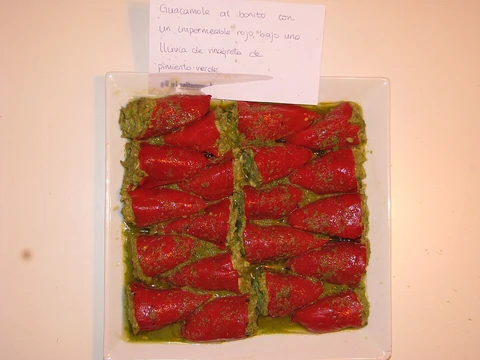
Banana pepper
A mild, tangy chili often pickled or stuffed.

Kolforn ( Kolforn ) I'd appreciate if you could mail me ([email protected]) if y · CC BY-SA 4.0
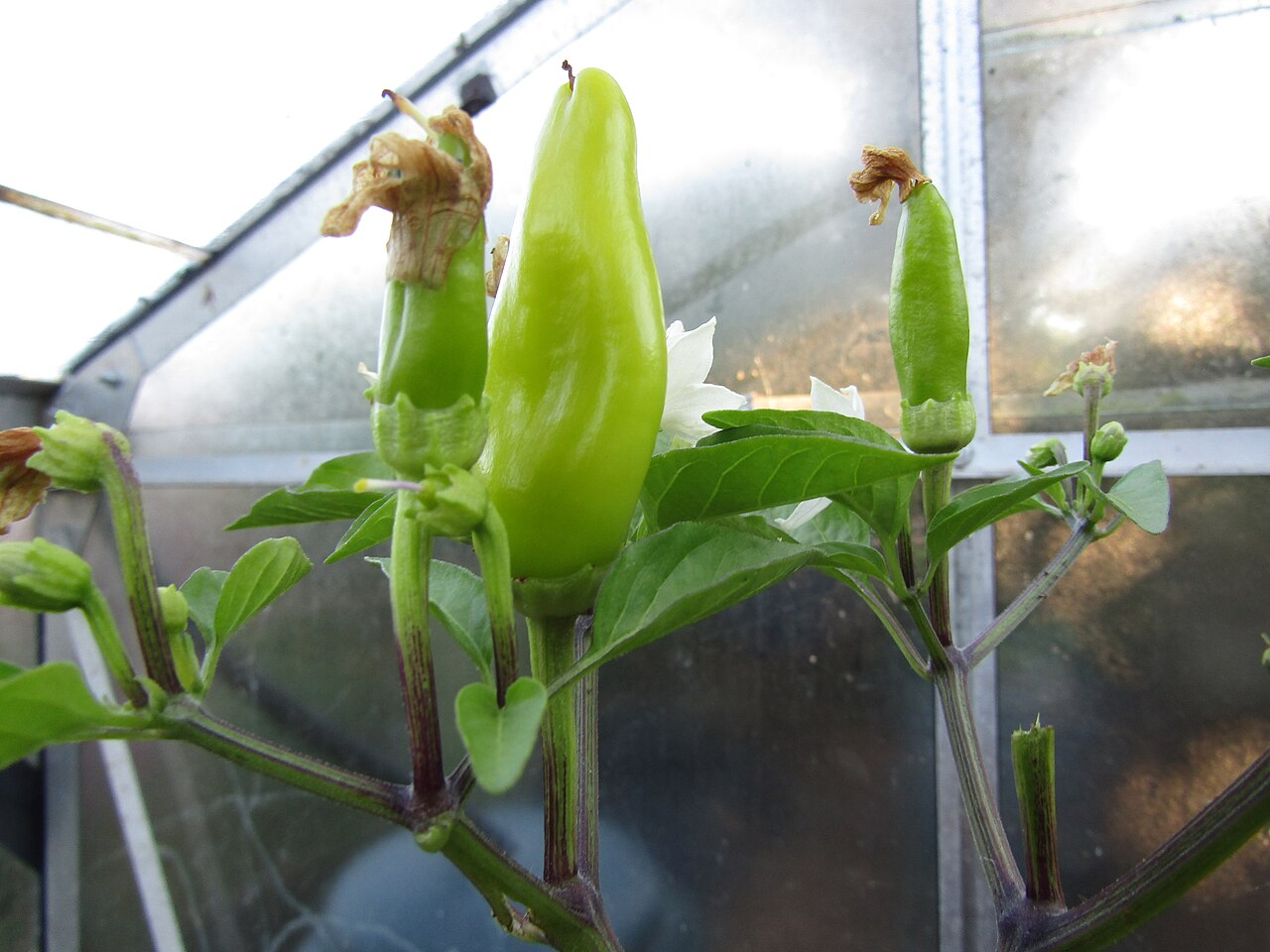
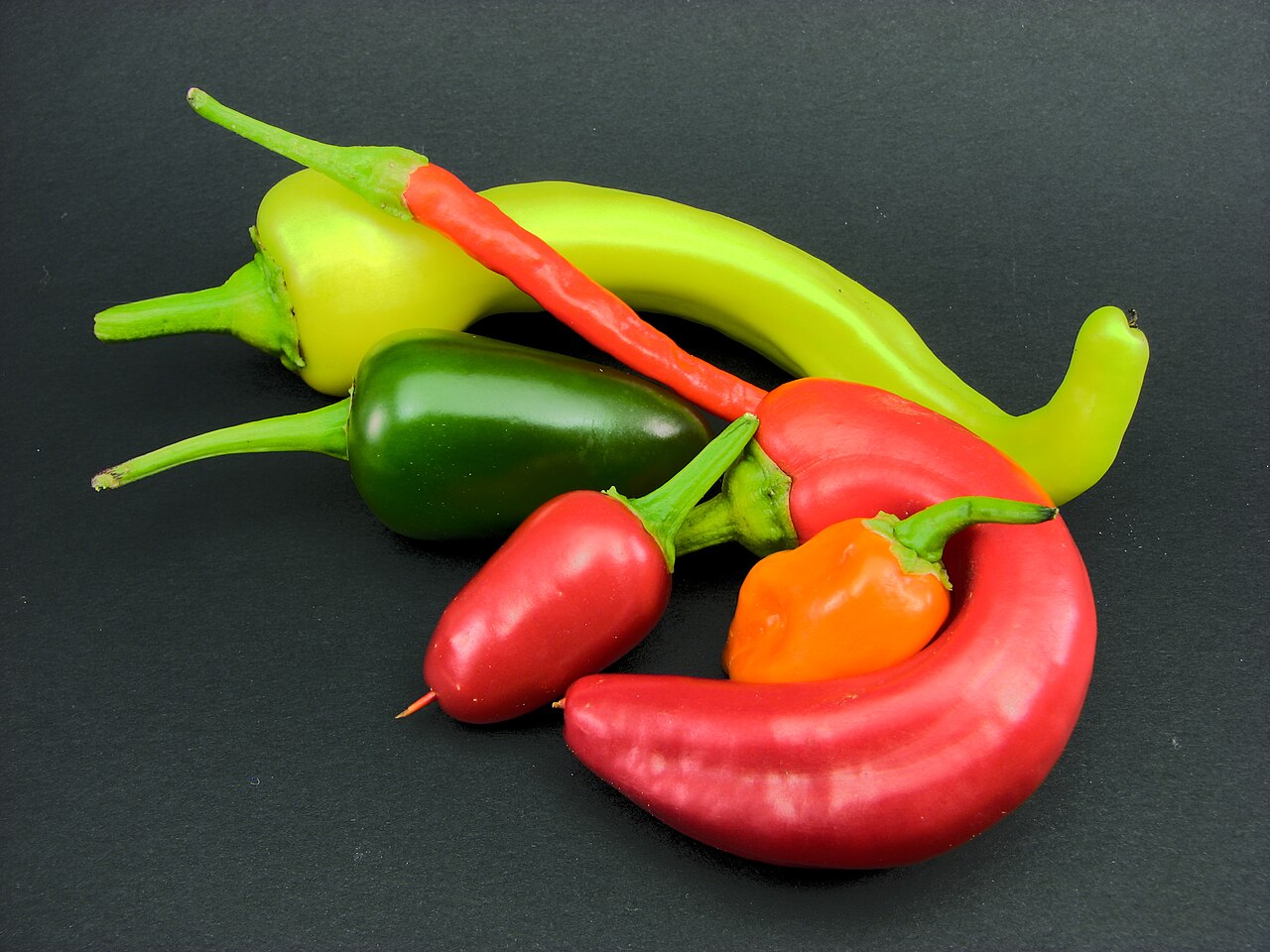
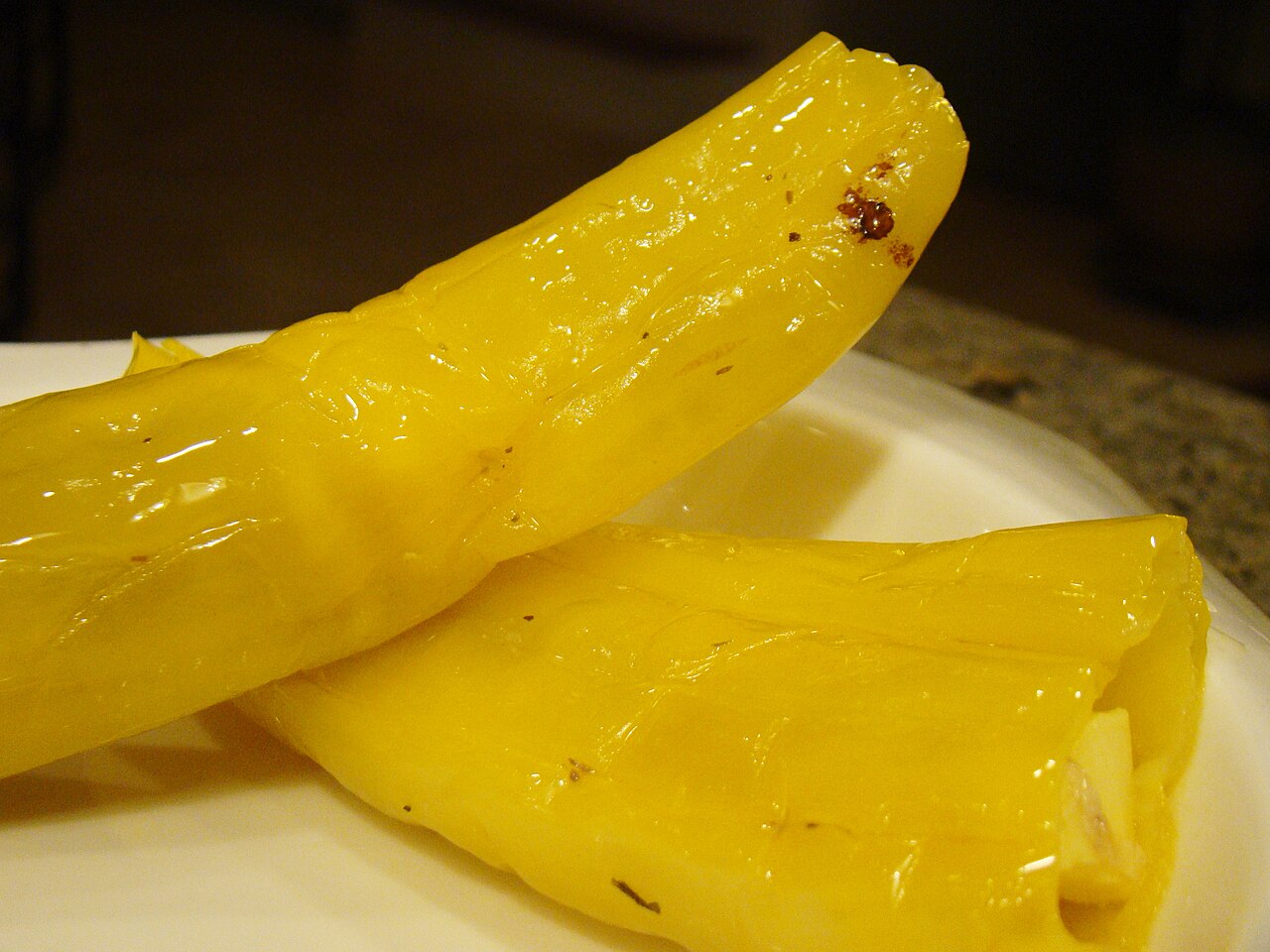
The banana pepper, also known as the yellow wax pepper or banana chili, is a mild, tangy cultivar of the species Capsicum annuum. It is notable for its bright yellow color, curved shape, and low heat level, ranging from 0 to 500 Scoville units, and is widely used in pickled, stuffed, or raw forms in various cuisines.
- species
- Capsicum annuum
- heat_range
- 0–500 Scoville units
- typical_length
- 2–3 inches (5–8 cm)
- mature_plant_height
- 1 to 2 feet (30 to 61 cm)
- common_colors
- Bright yellow, can change to green, red, or orange as it ripens
- cultivars
- Early Sweet Banana, Hungarian Yellow Wax, Long Sweet Yellow, Sweet Banana, Sweet Hungarian
Lore & Background
The banana pepper derives its common name from its curved shape and yellowish color, which resemble a banana. It is often confused with friggitelli (pepperoncini), though these are distinct. Hot varieties of banana pepper are called Hungarian wax peppers. The plant requires full sun and can be grown from seed or cuttings, preferring warmer climates. Mature plants reach 1 to 2 feet tall.
Reader's Guide
Banana peppers are significant for their versatility in culinary applications, particularly in pickled form as a garnish for pizzas, sandwiches, and Greek salads. They are also stuffed with prosciutto or cheese and served on antipasto bars, or used in relishes and salsas to add sweetness. Their mild heat makes them accessible to a wide range of palates. Nutritionally, raw banana peppers are rich in vitamin C, providing 92% of the Daily Value per 100 grams, and contain substantial vitamin B6. Their cultivation is straightforward, similar to other Capsicum annuum varieties, and they can be grown in many climates. The distinction between banana peppers and Hungarian wax peppers (the hot variety) is important for consumers seeking specific heat levels. The fruit's heat depends on maturity, with riper peppers being sweeter.
Did You Know?
- Banana peppers are also known as yellow wax peppers or banana chilies.
- Their heat ranges from 0 to 500 Scoville units, with riper peppers being sweeter.
- Friggitelli (pepperoncini) are often erroneously referred to as banana peppers.
- Raw banana peppers contain 92% water and are rich in vitamin C.
The Alchemy of Acid: How Ceviche Cooks Without Heat
Ceviche occupies a fascinating middle ground between raw and cooked. Unlike Japanese sashimi, which presents seafood in its completely unaltered state, ceviche relies on a chemical transformation driven by citrus juice. The citric acid in lemon or lime penetrates the flesh and denatures the proteins, causing the translucent raw tissue to turn opaque and firm. The result mimics the appearance and mouthfeel of heat-cooked fish, yet the seafood remains structurally raw. Importantly, this acid marination does not preserve the fish or eliminate pathogens the way true thermal cooking or curing would. The dressing extends beyond citrus, incorporating local chili peppers (or mustard in parts of Central America), sliced onions, and chopped cilantro. In regions like Mexico, the preparation may also feature tomatoes, avocado, and tomato sauce. This layered seasoning transforms a simple piece of raw seafood into a complex, tangy dish that has captivated diners across the Pacific coast of Latin America.
Ancient Roots: Proto-Ceviche Before the Europeans
Long before any European foot touched the Pacific coast, the civilizations of western South America were already marinating raw fish in acidic liquids. Archaeologist Ruth Shady's investigations suggest that the Caral civilization, flourishing in central Peru between 3500 BC and 1800 BC, consumed raw Peruvian anchovy alongside chili and sea salt. Another lineage traces back to the Moche, a coastal culture in northern Peru that thrived roughly two millennia ago, which used the fermented juice of the banana passionfruit—locally called tumbo—as a substitute for the citrus that would not arrive for another thousand years. During the Inca Empire, fish was reportedly marinated with chicha, a fermented corn beer, and historical chronicles describe coastal communities eating fish with sea salt and ají peppers. These practices, collectively termed Proto-Ceviche, reveal that the fundamental concept of acid-transforming raw seafood was deeply embedded in Andean coastal life centuries before the Spanish arrived.
Colonial Fusion: The Birth of the Modern Dish
The ceviche recognized worldwide today is essentially a product of the 16th-century Spanish colonial encounter. When colonizers brought limes, onions, and vinegar from Europe to the Americas, they merged Old World maceration techniques with New World seafood and ingredients. The technique of escabeche—softening raw fish or meat in vinegar, citrus, and spices—had roots in Moorish and Andalusian cooking, and its application to the abundant Pacific catch of Peru produced the modern dish. Historians broadly agree that this colonial-era fusion, specifically in what is now Peru, gave birth to the version of ceviche that has since spread across the region. The result was a culinary marriage: indigenous knowledge of raw fish preparation met European acid-based preservation methods, yielding a dish that was neither wholly pre-Columbian nor wholly European, but something entirely new born from the collision of two culinary worlds.
A Dish Claimed by Many: Identity, Heritage, and Recognition
Ceviche is a dish that belongs to no single nation, yet it is fiercely claimed by many. Along the Pacific coast, Chile, Colombia, Costa Rica, Ecuador, El Salvador, Guatemala, Honduras, Mexico, Puerto Rico, Nicaragua, Panama, and Peru all regard their local versions as native to their own culinary tradition. Peru, however, holds a singular distinction: ceviche is officially its national dish, and UNESCO has recognized it as an expression of Peruvian traditional cuisine and an Intangible Cultural Heritage of Humanity. The name itself carries linguistic layers—possibly descending from Classical Arabic sakbāj (meat cooked in vinegar) through Mozarabic and Andalusian Arabic, or alternatively from the Quechua word siwichi meaning fresh fish. The first documented appearance of the term dates to 1820, in La Chicha, regarded as the first Peruvian national anthem. Whether spelled ceviche, cebiche, seviche, or sebiche, the dish remains a living thread connecting ancient coastal kitchens to modern dining tables across an entire hemisphere.
Gallery
Frequently Asked Questions
What is a banana pepper?
The banana pepper is a mild, tangy cultivar of Capsicum annuum, recognized for its curved shape and vivid yellow hue. It also goes by the names yellow wax pepper and banana chili.
How hot is a banana pepper?
Banana peppers register between 0 and 500 Scoville units, placing them at the very low end of the heat spectrum. They deliver a gentle tang rather than any real burn.
What does a banana pepper look like?
At maturity the fruit shows a bright yellow skin in a gently curved, elongated form roughly two to three inches long. As it continues to ripen, the color can shift toward green, red, or orange.
How do people typically use banana peppers in cooking?
Their mildness and tangy flavor make them a favorite for pickling, stuffing with cheese or ground meat, and slicing raw into salads or sandwiches. They appear in a wide range of regional cuisines in those prepared forms.
What are some well-known banana pepper varieties?
Popular cultivars include Early Sweet Banana, Hungarian Yellow Wax, Long Sweet Yellow, Sweet Banana, and Sweet Hungarian. All share the species' gentle heat and curved yellow fruit while differing slightly in size or growing habit.
More in Peppers & Citrus Fruits 1-17
Spotted an error? Know more?
This is a living reference — every entry is fact-audited, and reader corrections feed straight into our audit queue. Suggest an edit · See this site's audit record