Bitter orange
Hybrid citrus tree prized for marmalade and essential oil.

Zeynel Cebeci · CC BY-SA 4.0
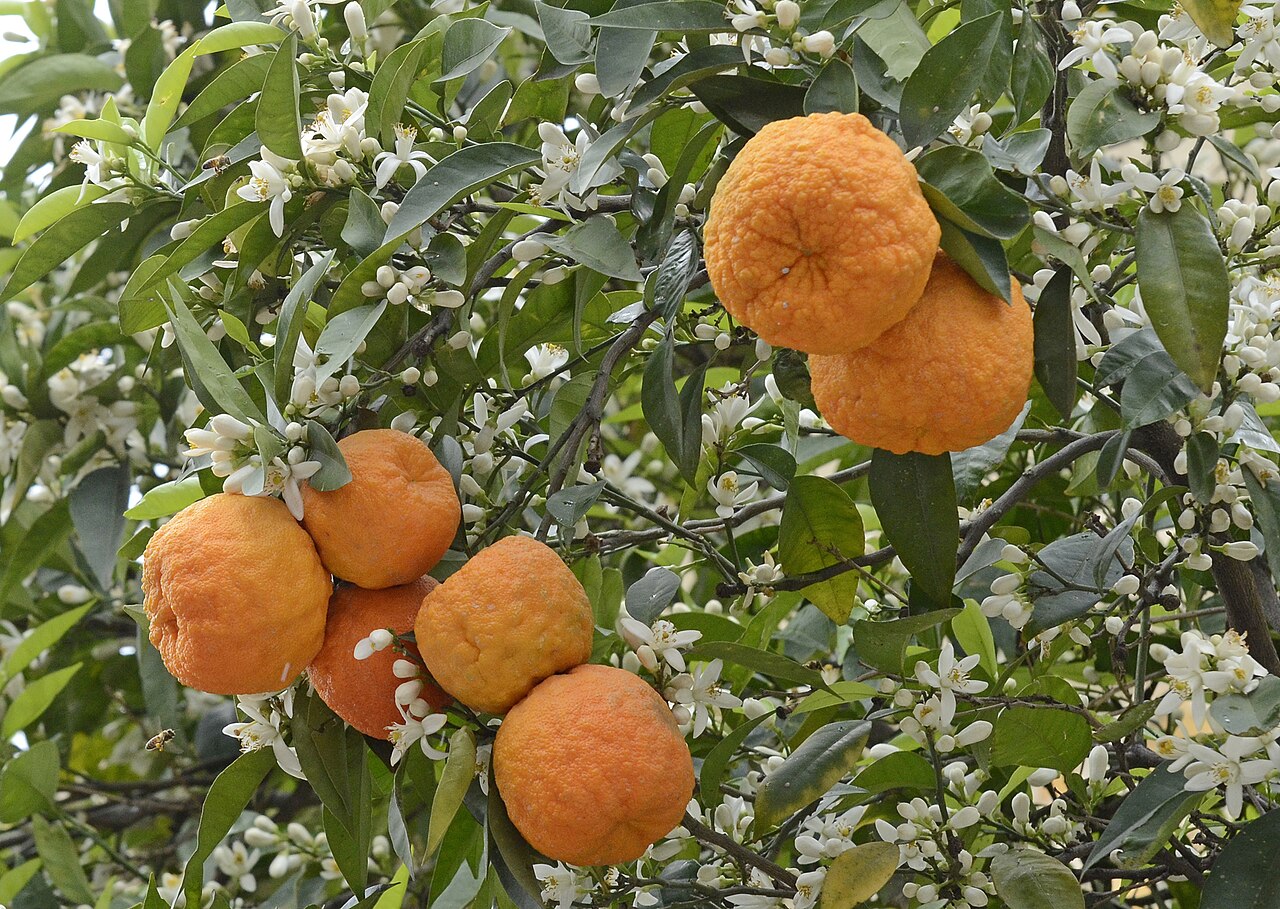
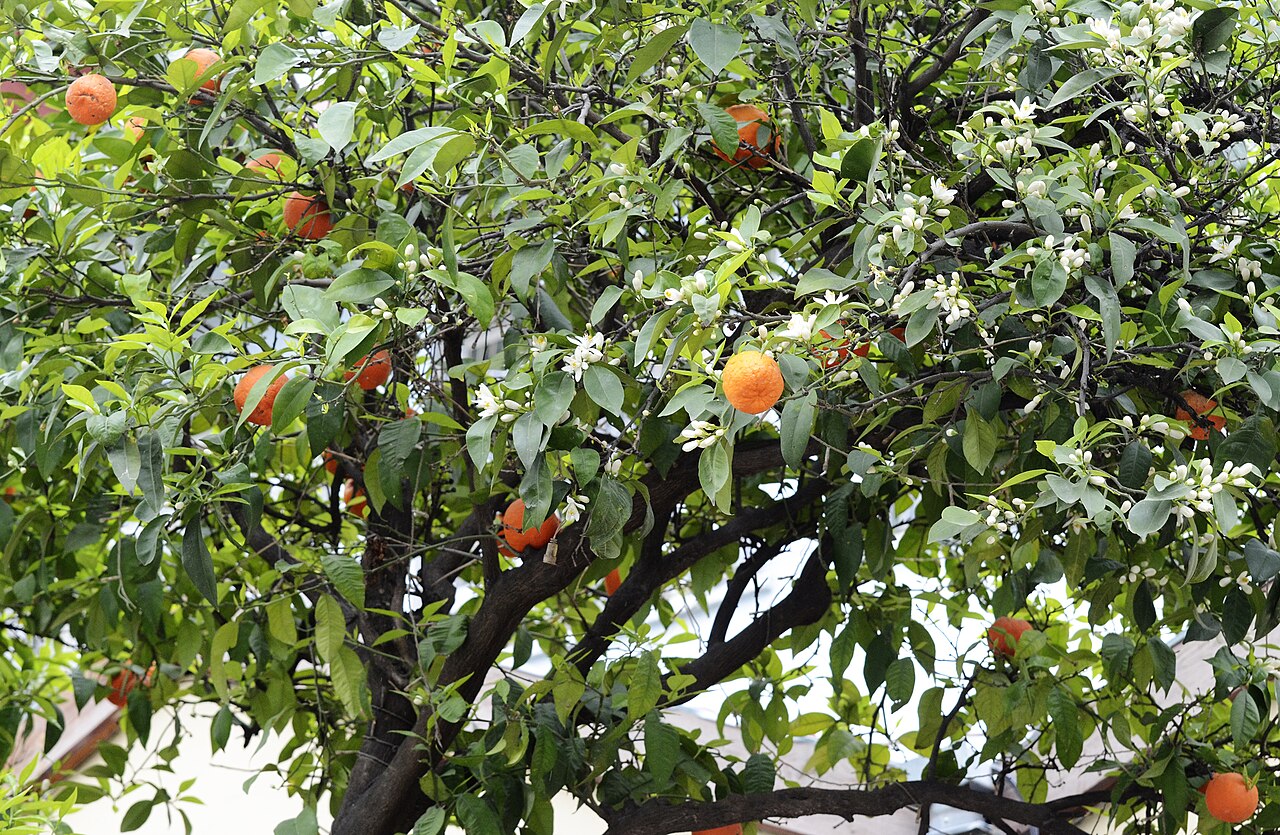
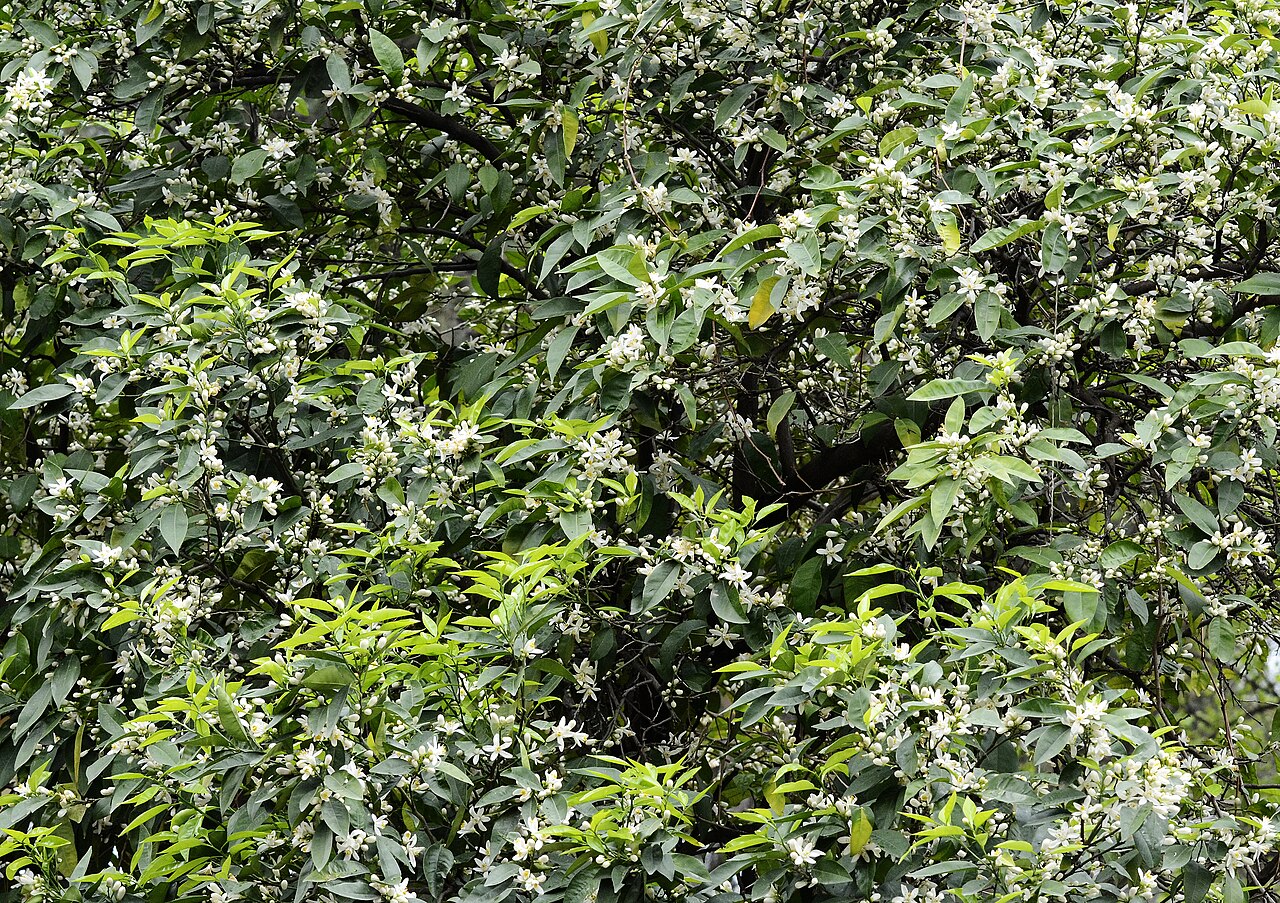
The bitter orange, also known as the sour orange, Seville orange, bigarade orange, or marmalade orange, is the hybrid citrus tree species Citrus × aurantium and its fruit. Native to Southeast Asia, it has been spread by humans to many parts of the world. It is a cross between the pomelo (Citrus maxima) and the wild type mandarin orange (Citrus reticulata). The bitter orange is used to make essential oil, used in foods, drinks, and pharmaceuticals, and the Seville orange is prized for making British orange marmalade.
- lifespan
- 50–100 years (typical for citrus trees)
Lore & Background
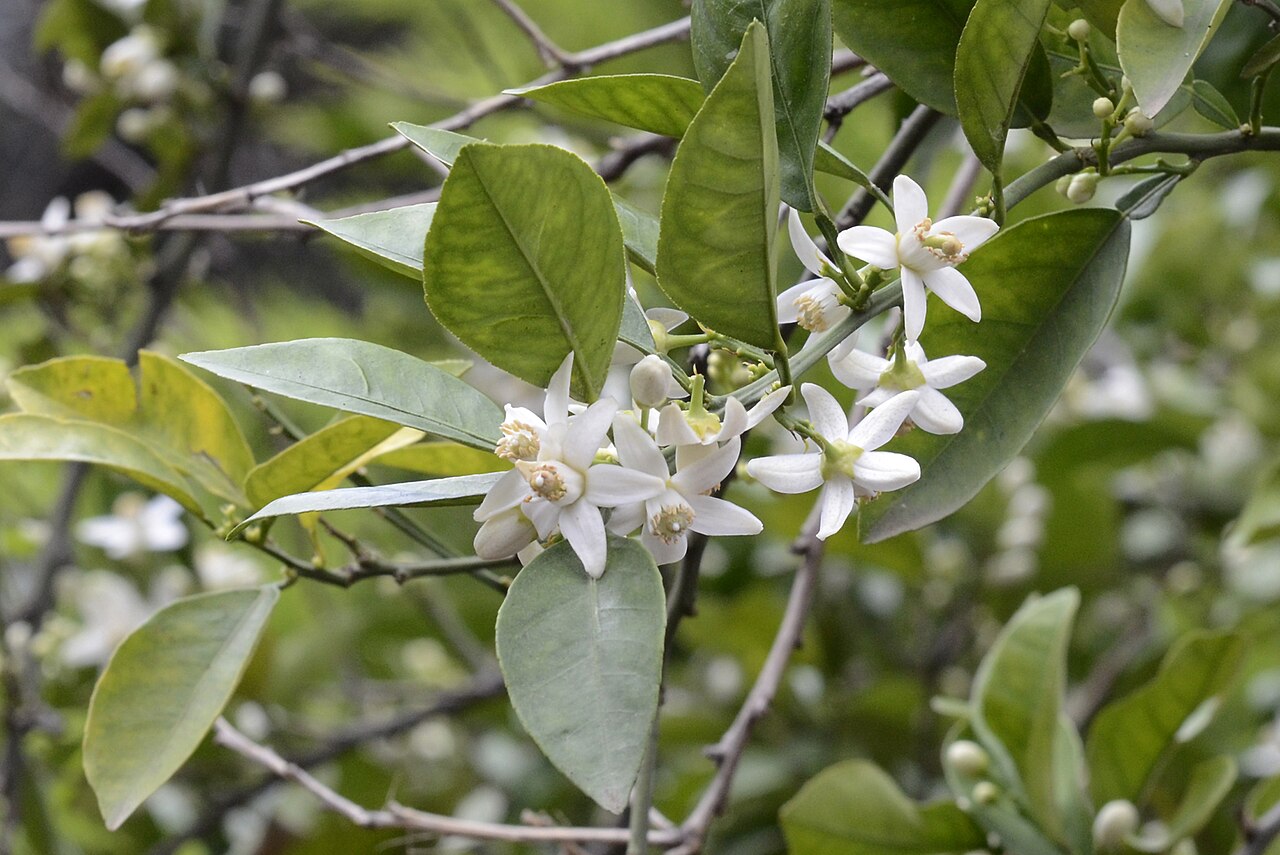
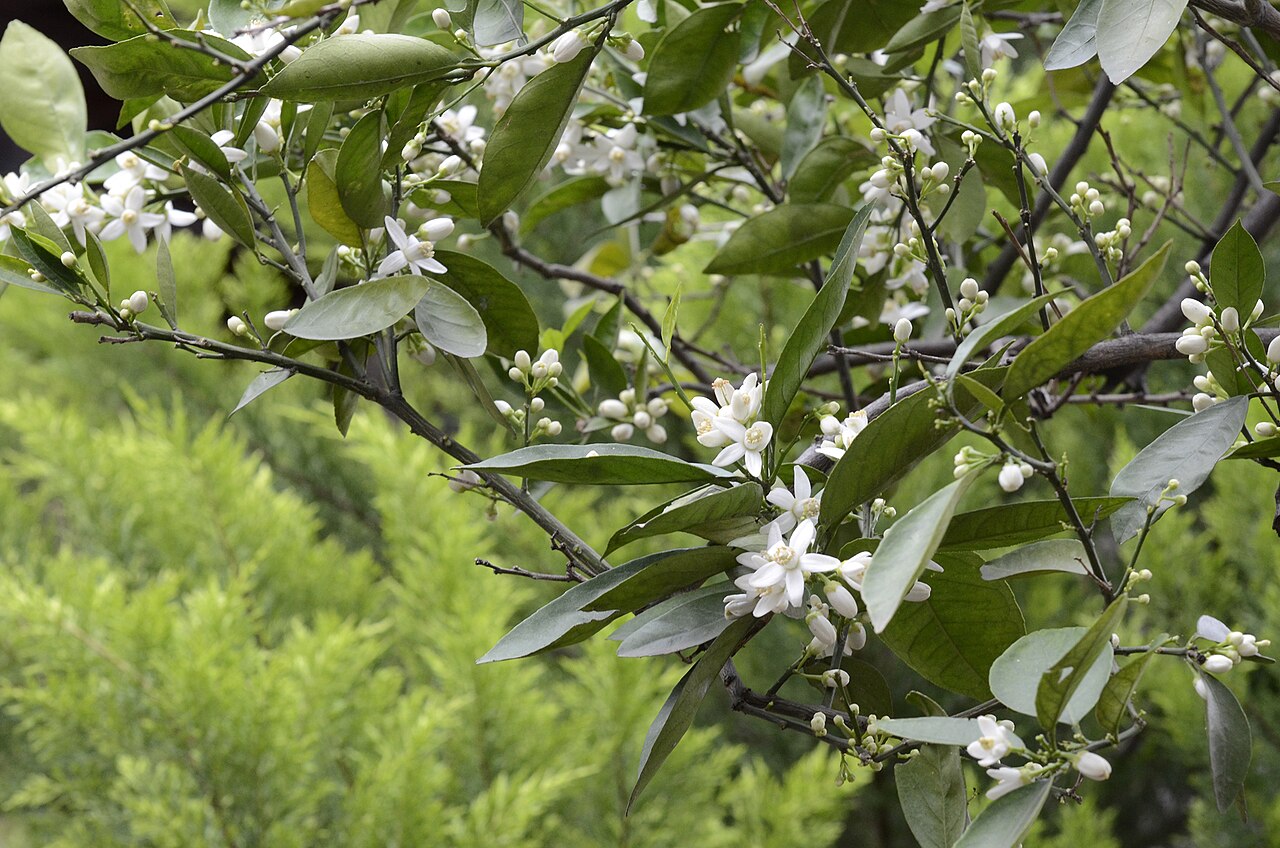
The bitter orange, like many cultivated Citrus species, is a hybrid, in its case of the wild mandarin and pomelo. It spread from its native ranges of South China and Southeast Asia via India and Iran to the Islamic world around the 9th to 10th centuries during the Arab Agricultural Revolution. After the Columbian exchange, the bitter orange itself was introduced to the New World by Spanish explorers, but the pomelo as a distinct species arrived much later (18th–19th century). The tree has orange fruit with a distinctly bitter or sour taste, alternate simple leaves on long petioles, and long thorns on the stems or branches. It requires little care and may live for up to 100 years, growing in subtropical regions but tolerating a brief frost.
Reader's Guide
The bitter orange holds significance as a versatile citrus hybrid used across culinary, pharmaceutical, and industrial domains. Its high pectin content makes the Seville orange especially valued for British orange marmalade, a tradition reflecting historic Atlantic trading relationships between Britain, Portugal, and Spain. Beyond marmalade, the fruit is used in dishes from duck à l'orange to Finnish mämmi, Greek spoon sweets, Turkish jam, Indian chutneys, Yucatecan cochinita pibil, and Surinamese pom. Essential oils from the peel, flowers, and leaves are employed in foods, drinks, perfumes, and pharmaceuticals, including Curaçao liqueur, Cointreau, and Neroli oil. The bitter orange also serves as rootstock for sweet orange groves, its wood is used in woodworking and baseball bats in Cuba, and its fruit and leaves can be used as soap. However, its use in herbal weight-loss supplements has raised safety concerns, as it contains synephrine and related compounds that may increase blood pressure and heart rate, with case reports linking it to strokes and other adverse events. The U.S. National Center for Complementary and Integrative Health found little evidence that bitter orange is safer than ephedra. Additionally, it may have serious grapefruit-like drug interactions with statins, nifedipines, some anti-anxiety drugs, and some antihistamines.
Did You Know?
- The bitter orange is a hybrid of the pomelo and the wild type mandarin orange.
- The Seville orange is prized for making British orange marmalade due to its high pectin content.
- Bitter orange contains synephrine, a substance similar to epinephrine that can increase blood pressure and heart rate.
- The dried peel of the laraha variety (C. × aurantium subsp. currassuviencis) is used in Curaçao liqueur.
Origins & Botanical Identity
Yuzu is a citrus fruit belonging to the Rutaceae family, believed to have first appeared in central China as a first-generation hybrid between the mangshanyeju subspecies of mandarin orange and the ichang papeda. This crossbreeding gives the fruit a distinctive character that sets it apart from more familiar citrus varieties. The fruit itself looks much like a small, bumpy clementine, taking on either a yellow or green hue depending on how ripe it is. Typical specimens measure between 5.5 and 7.5 centimeters across, though exceptional fruits can reach the size of a grapefruit at ten centimeters or more. The plant grows as an upright shrub or small tree, often armed with prominent thorns. Its leaves carry a notably large, leaf-like petiole similar to those found on makrut lime and ichang papeda, and they release a heavy, pleasant fragrance. Yuzu is frequently confused with sudachi, a Japanese citrus from Tokushima Prefecture, but the two can be distinguished by the fact that yuzu eventually ripens to an orange tone while sudachi does not, and their flavor profiles differ in subtle ways.
Cultivation & Hardiness
Yuzu first grew wild in the mountainous regions of Tibet and central China before being carried to Japan and Korea during the Tang dynasty, where it has remained a staple of local agriculture ever since. The plant is notably slow to mature, typically needing a full decade before it produces its first fruit. Growers who wish to accelerate this timeline often graft yuzu onto karatachi, a related species, to bring the first harvest forward. One of yuzu's most remarkable traits is its cold tolerance, a quality inherited from its ichang papeda parent. While most citrus varieties are sensitive to freezing temperatures, yuzu can endure winters that dip to minus seven degrees Celsius, making it viable in climates where other citrus would simply perish. This hardiness has allowed the fruit to spread beyond East Asia in recent decades, with successful cultivation now reported in New Zealand, Australia, Spain, Italy, and France. In Japan alone, domestic production reached approximately 27,000 tons by 2016, underscoring how deeply embedded the fruit has become in regional farming.
Culinary & Cultural Role in East Asia
In Japanese kitchens, yuzu is rarely consumed as a whole fruit. Instead, its intensely aromatic zest and tart juice serve a role analogous to lemon in Western cooking, bringing a flavor that closely echoes grapefruit while carrying warm mandarin-orange undertones. The fruit is a cornerstone of ponzu, a versatile citrus-based dipping sauce, and it is pressed into yuzu vinegar for everyday seasoning. Combined with honey, it becomes yuzu hachimitsu, a syrup that forms the base of a popular winter tea or mingles into cocktails like the yuzu sour. Yuzu kosho, a pungent condiment blending green or yellow yuzu zest with chili peppers and salt, adds heat and brightness to a wide range of dishes. Slivers of the rind garnish chawanmushi, a savory egg custard, and float in bowls of miso soup. Sweets such as marmalade and cakes also feature the fruit, and its flavor has even been licensed for snack products like Doritos. In Korea, the fruit—called yuja—is most celebrated in yuja-cheong, a sugared marmalade, which in turn is diluted into yuja tea or stirred into yuja-hwachae, a fragrant fruit punch. Yuja also appears in Korean interpretations of Western dishes such as salads.
Aroma, Tradition & Global Reach
Beyond the kitchen, yuzu's powerful fragrance has shaped cultural traditions and even musical craftsmanship. In Japan, floating whole yuzu fruits in a hot bath on Tōji, the winter solstice, is a custom stretching back to at least the early eighteenth century. The citrus releases its scent into the steam, and the practice—known as yuzu yu—is believed to ward off colds, soften rough skin, warm the body, and ease the mind. The oil extracted from the peel is also sold as a standalone fragrance. In Korea, yuzu wood has long been chosen for constructing the taepyeongso, a traditional oboe-like wind instrument. The fruit's journey westward gained a milestone in 2003 when The New York Times highlighted its growing popularity among chefs in the United States and other Western countries. Although the USDA prohibits the import of fresh yuzu to protect domestic crops from disease, the fruit has been cultivated in California since 1888, making it available for local sale. The name has even crossed into pop culture: the Japanese J-Pop duo Yuzu, formed in 1997, took their moniker from a yuzu-flavored sherbet one member was enjoying while brainstorming the band's identity.
Gallery

Frequently Asked Questions
Who is Bitter orange?
Bitter orange (Citrus × aurantium) is a hybrid citrus tree species also called sour orange, Seville orange, or bigarade orange. It arose as a cross between the pomelo and the wild mandarin orange and is native to Southeast Asia.
What are Bitter orange's powers/role?
Bitter orange is the go-to fruit for traditional British orange marmalade and is also a key source of essential oil used in foods, beverages, and pharmaceuticals. Its distinctly sour, aromatic profile sets it apart from sweeter commercial oranges.
How does Bitter orange's story end?
A bitter orange tree typically reaches the end of its productive life after roughly 50 to 100 years, consistent with most citrus species. Its legacy, however, carries forward through the marmalade, perfumery oils, and cultivated varieties that continue to spread across the globe.
Why is Bitter orange important?
It is a foundational hybrid in citrus cultivation and remains the primary fruit for authentic marmalade production. Beyond the kitchen, its extracted essential oil plays a role in perfumery, food flavoring, and medicinal preparations.
Where does Bitter orange come from?
Bitter orange originated in Southeast Asia as a natural cross between pomelo and wild mandarin orange. Humans have since transplanted it to nearly every continent, making it one of the most widely dispersed citrus species on Earth.
More in Peppers & Citrus Fruits 1-17
Spotted an error? Know more?
This is a living reference — every entry is fact-audited, and reader corrections feed straight into our audit queue. Suggest an edit · See this site's audit record