Blood orange
A sweet orange variety with crimson flesh and raspberry-like flavor.

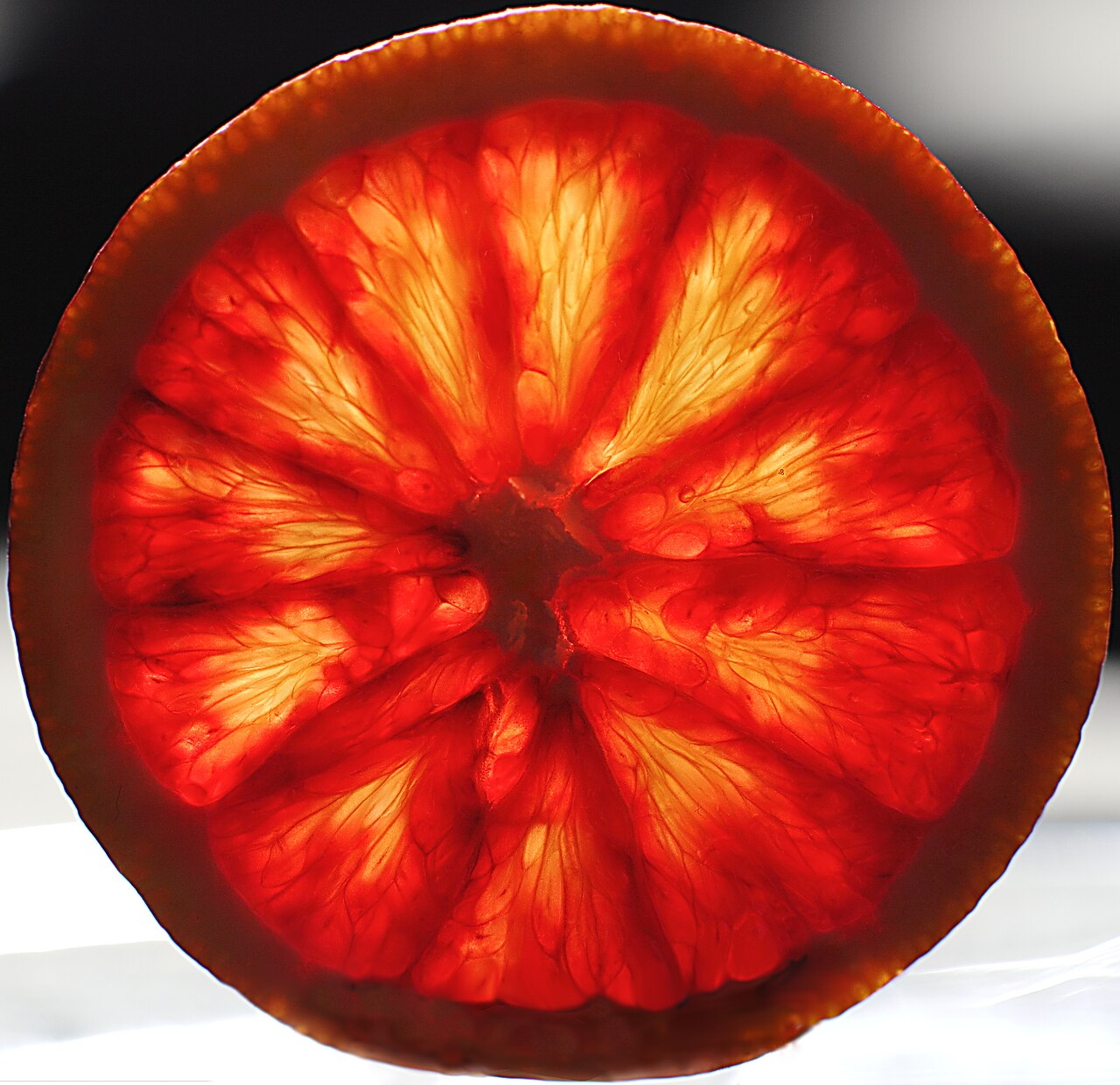
Eric Hill from Boston, MA, USA · CC BY-SA 2.0
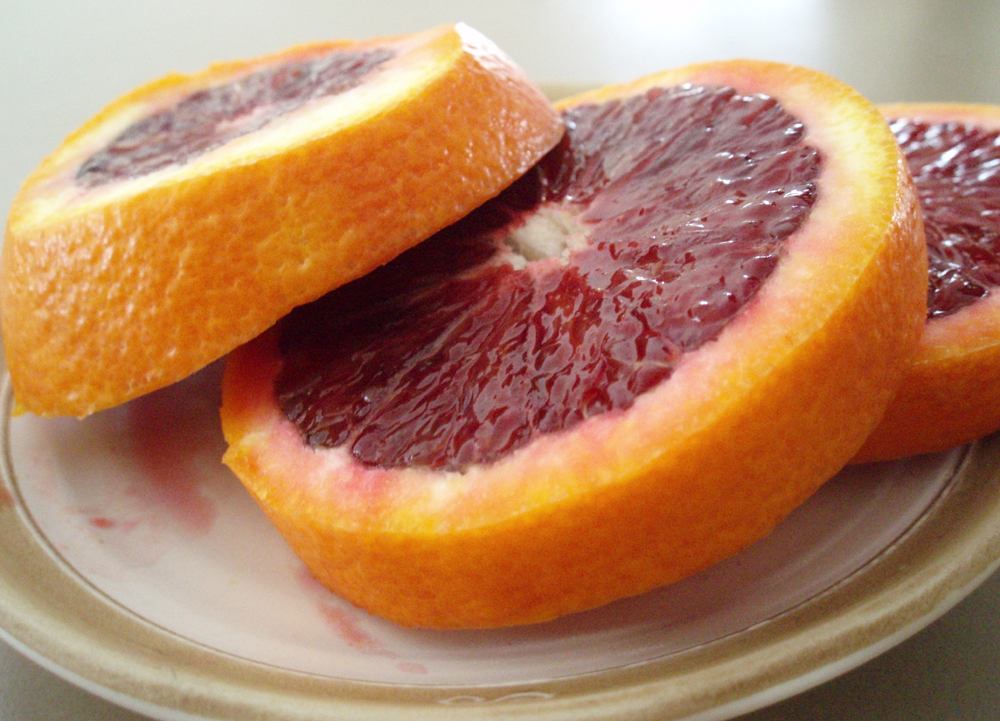
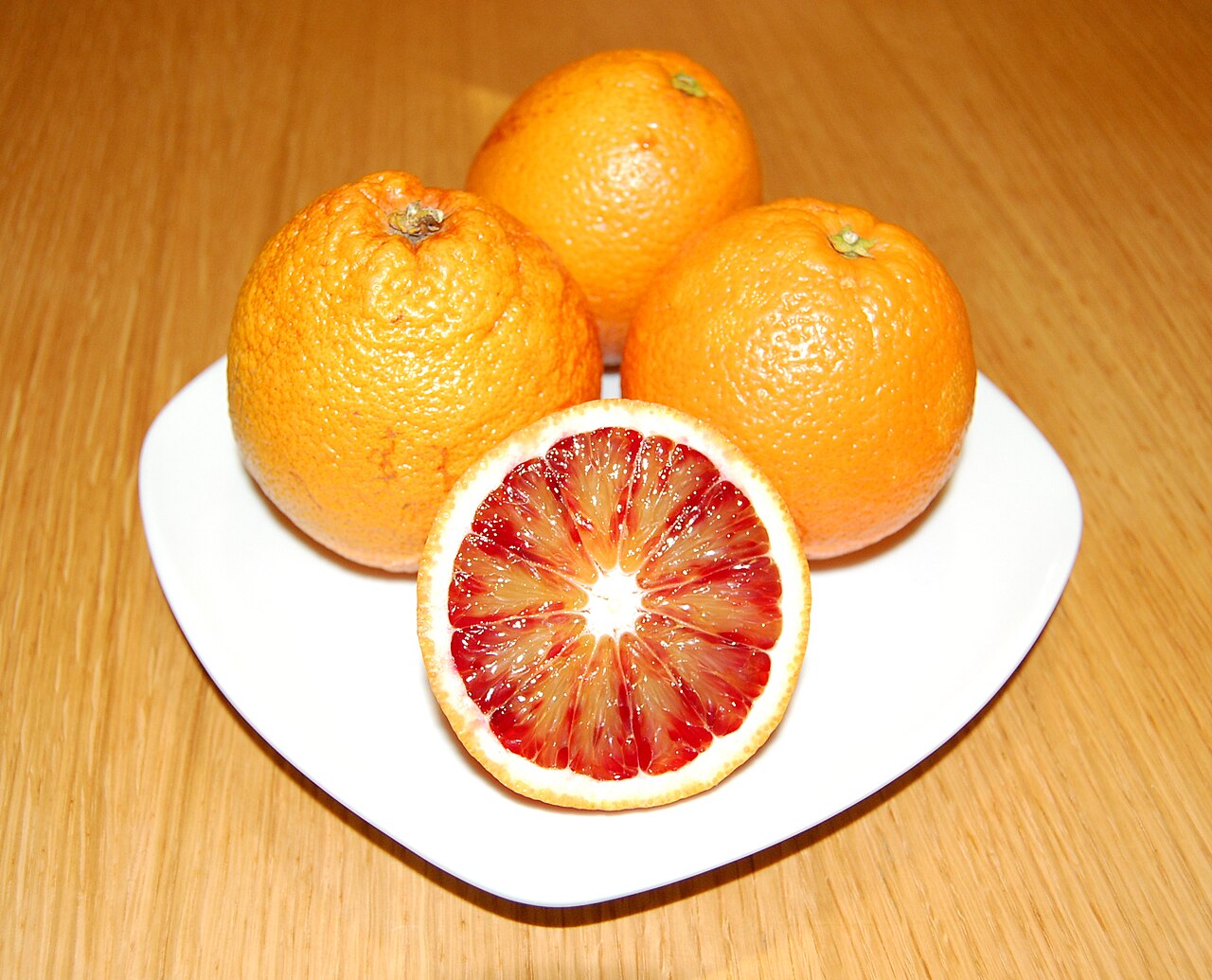
The blood orange is a variety of sweet orange (Citrus × sinensis) with crimson flesh colored near or the same as blood, also known as the raspberry orange. Its dark flesh color is due to anthocyanins, a family of polyphenol pigments uncommon in citrus fruits, with chrysanthemin (cyanidin 3-O-glucoside) as the main compound. The flesh develops its characteristic red color when the fruit develops with low temperatures during the night, and the skin can be tougher and harder to peel than that of other oranges. Blood oranges have a unique flavor distinctly raspberry-like in addition to usual citrus notes. The blood orange is a natural mutation of the orange, which is itself a hybrid, probably between the pomelo and the mandarin. Within Europe, the arancia rossa di Sicilia (red orange of Sicily) has protected geographical status.
- Type
- Fruit (variety of sweet orange)
- Scientific name
- Citrus × sinensis
- Also known as
- Raspberry orange
- Origin
- Natural mutation of orange; possibly southern Mediterranean
- Key pigment
- Anthocyanins (chrysanthemin)
- Common cultivars
- Tarocco, Sanguinello, Moro
- Protected status
- Arancia rossa di Sicilia (EU protected geographical status)
Lore & Background
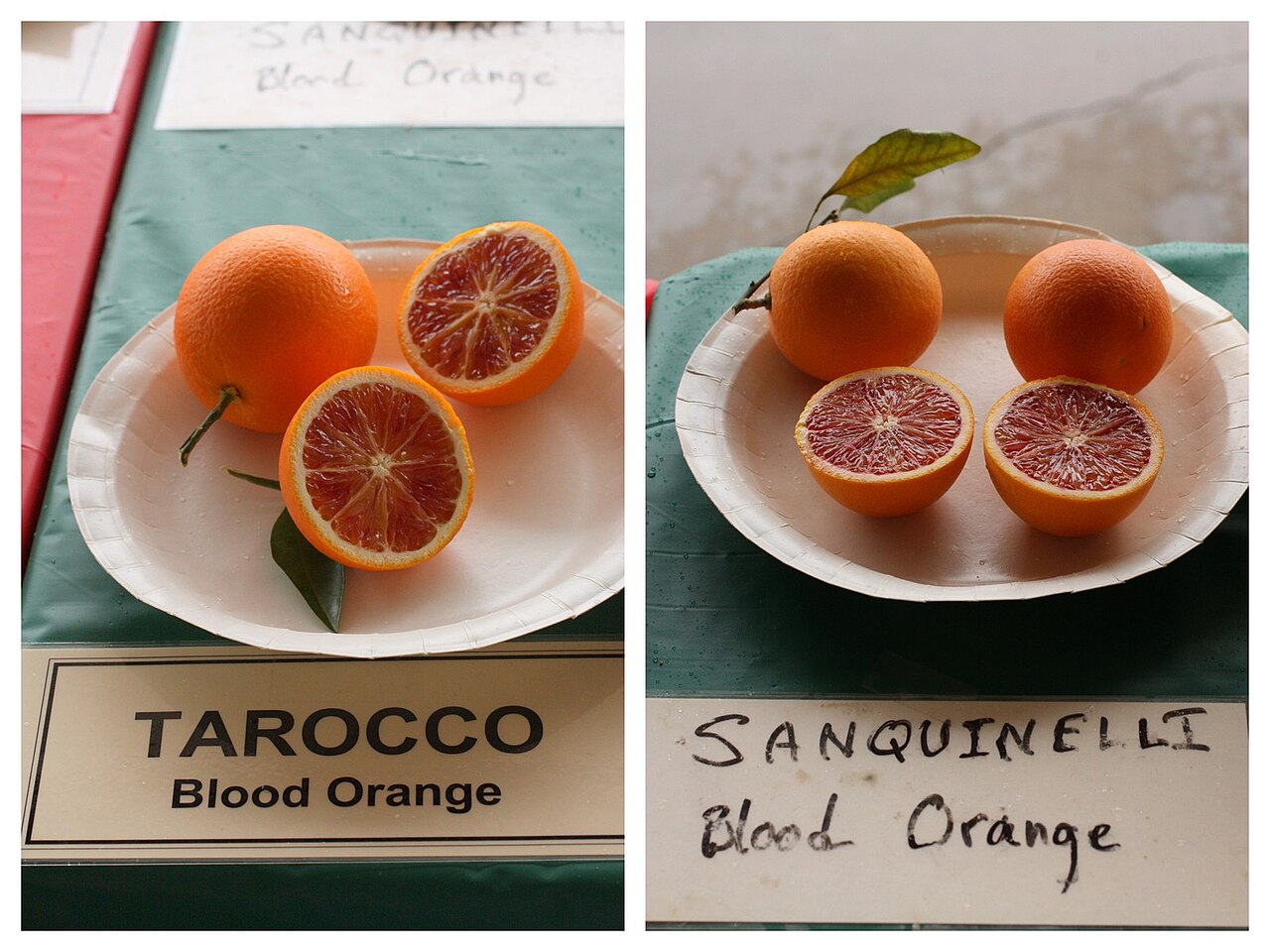
Blood oranges may have originated in the southern Mediterranean, where they have been grown since the 18th century. They are a common orange grown in Italy. The anthocyanins that give the orange its distinct maroon color only develop when temperatures are low at night, as during the Mediterranean fall and winter. The three most common types are the Tarocco (native to Italy), the Sanguinello (native to Italy, specifically Sicily), and the very dark Moro (native to Italy), the newest variety of the three. The Moro is believed to have originated in the early 20th century (around the 1930s or 1940s) in the citrus-growing area around Lentini in Sicily as a bud mutation of the Sanguinello Moscato. The Tarocco is thought to have derived from a mutation of the Sanguinello Moscato or as a separate natural mutation, and is perhaps the sweetest and most flavorful of the three types. The Sanguinello, known in Italy since at least the 18th century, has reddish skin, few seeds, and sweet, tender flesh.
Reader's Guide
Blood oranges are significant as a distinctive natural mutation of the common sweet orange, notable for their anthocyanin-based pigmentation, which is rare among citrus fruits. Their cultivation, particularly in Italy and Spain, has led to protected geographical status for Sicilian varieties. The three main cultivars—Tarocco, Sanguinello, and Moro—offer a range of flavors and color intensities, from the sweet, seedless Tarocco with the highest vitamin C content of any orange variety, to the deep red, slightly bitter Moro. Blood oranges are used in culinary applications such as marmalade, baking, salads, gelato, sorbet, and Italian soda. Their season in the United States runs from December to March (Texas) and November to May (California). The fruit's anthocyanin pigments begin accumulating at the edges of segments and the blossom end, continuing in cold storage after harvest. Blood oranges are a rich source of vitamin C, vitamin A, potassium, manganese, anthocyanins, antioxidants, and dietary fiber.
Did You Know?
- The blood orange is also known as the raspberry orange due to its distinct raspberry-like flavor.
- The dark flesh color comes from anthocyanins, a family of polyphenol pigments uncommon in citrus fruits.
- The Moro variety is believed to have originated as a bud mutation of the Sanguinello Moscato in Sicily in the early 20th century (around the 1930s or 1940s).
- The Tarocco orange is known for its high vitamin C content, though it is not definitively established as the highest of all orange varieties worldwide.
Botanical Origins & Physical Character
Yuzu (Citrus × junos) is a citrus fruit whose roots trace back to central China, where it is thought to have arisen as a first-generation cross between the mangshanyeju subspecies of mandarin orange and the ichang papeda. Belonging to the Rutaceae family, this fruit has been cultivated primarily across East Asia for centuries, though more recently growers in New Zealand, Australia, Spain, Italy, and France have taken to tending it as well. Botanically, yuzu presents as an upright shrub or small tree covered in prominent thorns, with heavily scented leaves that feature a distinctive large, leaf-like petiole—a trait shared with its relatives makrut lime and ichang papeda. The fruit itself resembles a yellow clementine with uneven skin, typically measuring 5.5 to 7.5 centimeters in diameter, though specimens can reach the size of a grapefruit at ten centimeters or more. One of its most remarkable botanical traits is its relative frost-hardiness, inherited from its cold-tolerant papeda parent, allowing it to survive winters as cold as minus seven degrees Celsius where more delicate citrus varieties would perish. Growth is notably slow, generally requiring a decade before the first fruit appears, though grafting onto karatachi can accelerate that timeline.
Culinary Role in East Asian Kitchens
In Japanese kitchens, yuzu plays a role similar to lemon in Western cooking, with both its intensely aromatic zest and tart, fragrant juice used extensively. The flavor closely mirrors grapefruit while carrying mandarin orange overtones. Japanese domestic production reached roughly twenty-seven thousand tons by 2016, yet the fruit is rarely eaten whole; instead it is worked into sauces, condiments, and beverages. It forms a key component of ponzu, a citrus-based sauce shared with sudachi and daidai, and appears in yuzu vinegar, yuzu hachimitsu (a honey syrup for tea and cocktails like the yuzu sour), and the spicy paste yuzu kosho, blending green or yellow zest with chili peppers and salt. Slivered rind garnishes chawanmushi and miso soup, while the fruit flavors marmalade, cake, and snack products such as Doritos. In Korea, the fruit—called yuja—stars in yuja-cheong, a sugared marmalade made from peeled, depulped, thinly sliced fruit, which becomes the base for yuja tea and yuja-hwachae, a fruit punch. Yuja also appears in Korean-style Western dishes like salads.
Cultural Traditions & Non-Culinary Uses
Beyond the kitchen, yuzu carries deep cultural significance in East Asia, most visibly in the tradition of the yuzu bath. On Tōji, the winter solstice, Japanese households float whole fruits in hot bathwater—sometimes enclosed in a cloth bag, sometimes cut in half so the juice mingles with the water—releasing the fruit's characteristically strong aroma. This custom, known as yuzu yu or yuzu buro, dates back to at least the early eighteenth century and is believed to ward off colds, smooth rough skin, warm the body, and calm the mind. The oil extracted from yuzu skin is also marketed as a fragrance in its own right. In Korea, the wood of the yuzu tree finds a place in craftsmanship: the body of the taepyeongso, a traditional oboe related to the Chinese suona and the zurna, is frequently carved from yuzu wood alongside jujube and mulberry. Even in popular culture, the fruit leaves its mark—the Japanese J-Pop duo Yuzu, formed in 1997, took its name from a yuzu-flavored sherbet that member Yūjin Kitagawa was eating while brainstorming the group's identity with fellow member Kōji Iwasawa.
Global Spread & Western Adoption
Yuzu's journey from the wild hills of Tibet and central China to the world's tables spans centuries. The fruit was introduced to Japan and Korea during the Tang dynasty, where it became firmly embedded in local cuisines and customs. In the modern era, cultivation has expanded well beyond East Asia, with growers now tending yuzu in New Zealand, Australia, Spain, Italy, and France. In the United States, the story is more complicated: the Department of Agriculture maintains a ban on importing fresh yuzu and citrus trees from abroad to protect domestic crops from contagious diseases. Yet yuzu has been present in American soil since its introduction to California in 1888, where it is now cultivated and available for purchase. By the early twenty-first century, Western chefs had begun incorporating the fruit into their work, a trend that gained public attention through a 2003 feature in The New York Times. This gradual Western adoption—driven by the fruit's unique tartness, its grapefruit-like character with mandarin undertones, and its powerful aroma—marks yuzu's transition from a regional specialty to a globally recognized citrus.
Gallery


Frequently Asked Questions
What is Blood orange?
Blood orange is a variety of sweet orange (Citrus × sinensis) set apart by its deep crimson flesh and a flavor that carries notes reminiscent of raspberry. It is also commonly referred to as the raspberry orange.
Why is Blood orange's flesh red?
The striking red coloration comes from anthocyanins, a group of polyphenol pigments rarely encountered in citrus fruits. The dominant compound is chrysanthemin, and the hue intensifies when the fruit matures under cool nighttime temperatures.
How does Blood orange taste compared to a regular orange?
Beyond the standard citrus tang, blood orange carries a distinctly raspberry-like undertone that sets it apart from other orange varieties. Its peel also tends to be tougher and more resistant to peeling than that of a typical sweet orange.
What are the most common cultivars of Blood orange?
The three widely recognized cultivars are Tarocco, Sanguinello, and Moro. Each differs slightly in shape, peel thickness, and the intensity of the crimson coloring in the flesh.
Where did Blood orange originate?
Blood orange is believed to have arisen as a natural mutation of the sweet orange, most likely in the southern Mediterranean region. It has since become a well-established part of citrus cultivation throughout that area.
More in Peppers & Citrus Fruits 1-17
Spotted an error? Know more?
This is a living reference — every entry is fact-audited, and reader corrections feed straight into our audit queue. Suggest an edit · See this site's audit record