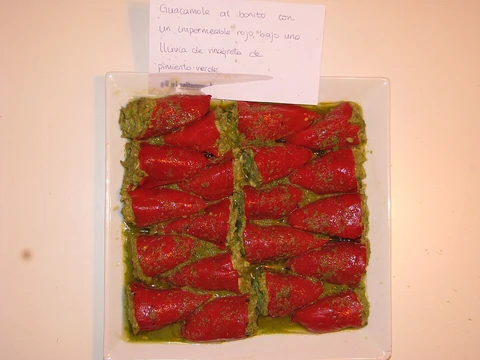
Habanero
A pungent chili pepper named after Havana, Cuba.

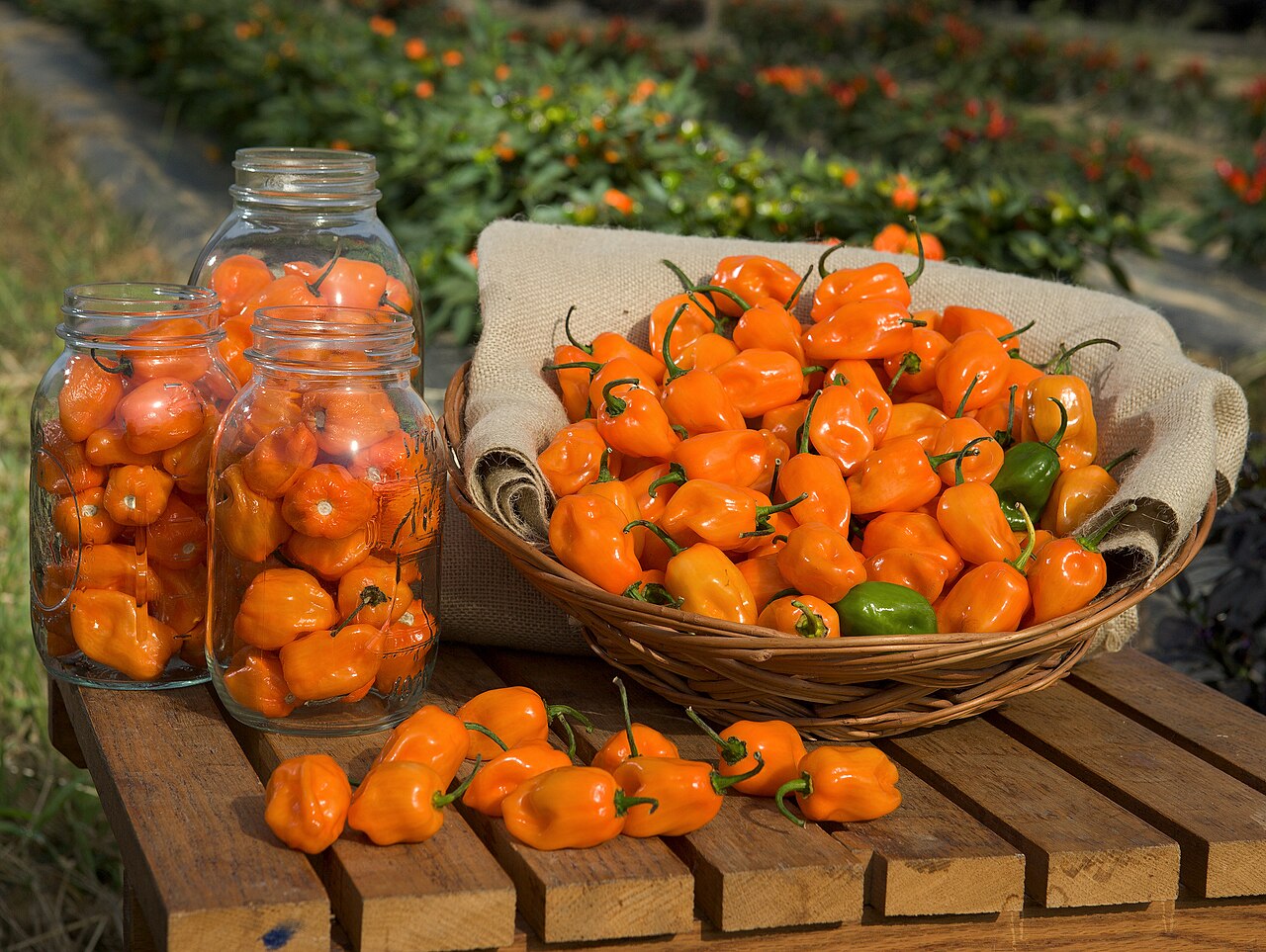
Zinnmann · CC BY-SA 3.0
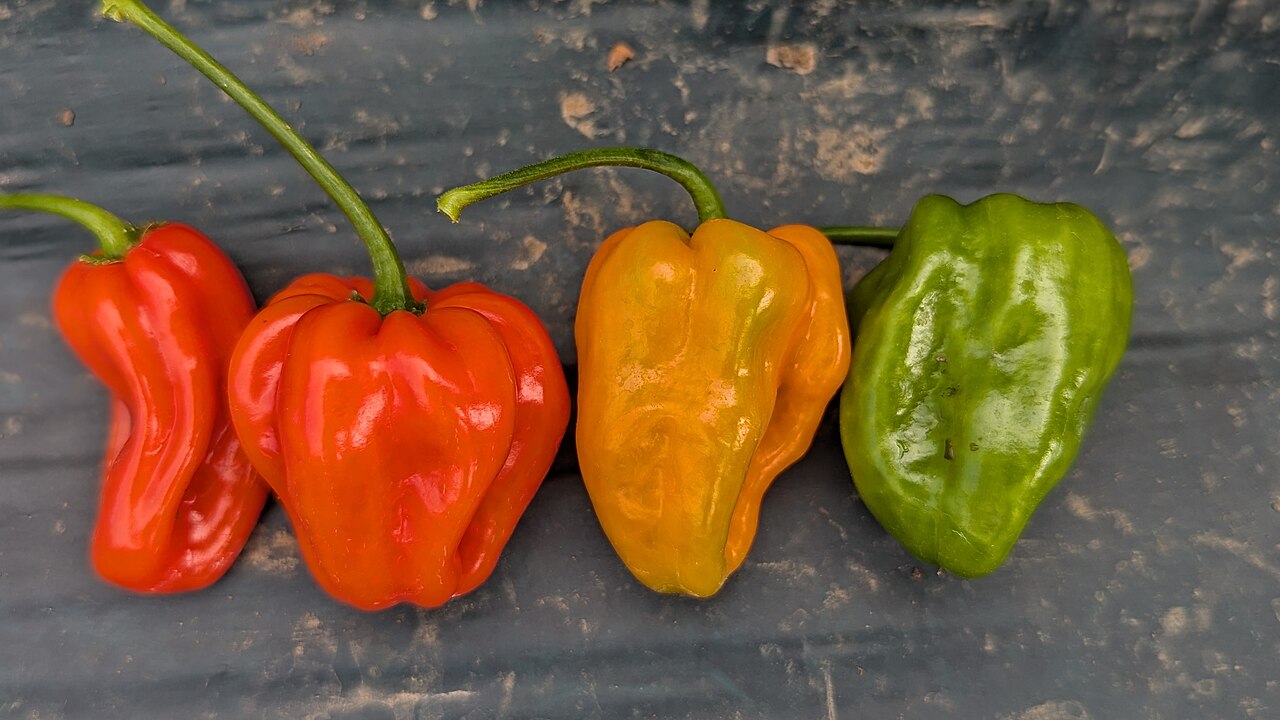
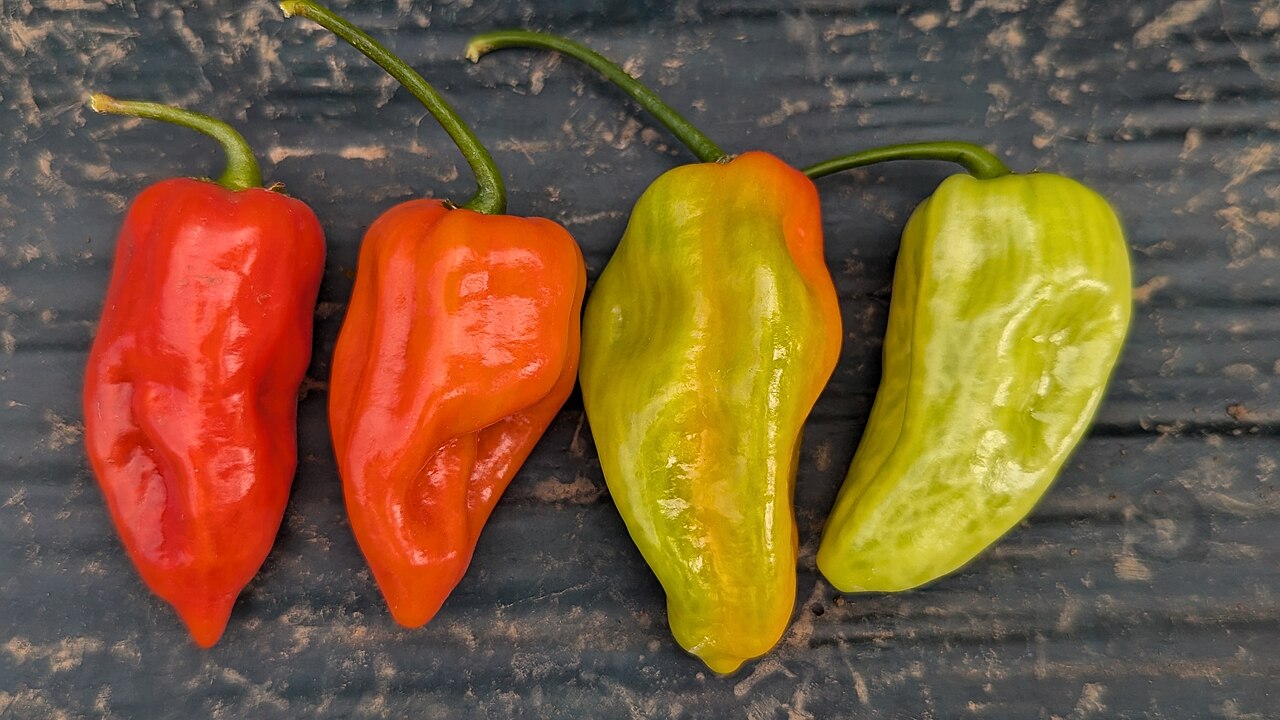
The habanero is a pungent cultivar of Capsicum chinense chili pepper, known for its intense heat, floral aroma, and use in hot sauces and spicy foods. Unripe habaneros are green, maturing into colors including orange, red, white, brown, yellow, green, or purple, and typically measure 2–6 centimeters long.
- species
- Capsicum chinense
- common_colors
- orange, red, white, brown, yellow, green, purple
- typical_length
- 2–6 cm (3⁄4–2+1⁄4 in)
- origin
- Amazon region, spread to Mexico
- largest_producer
- Yucatán Peninsula, Mexico
Lore & Background
The habanero chili originates from the Amazon, from which it was spread, reaching Mexico. Today, the largest producer is the Yucatán Peninsula in Mexico, where habaneros are integral to Yucatecan food, accompanying most dishes as natural form, purée, or salsa. Other modern producers include Belize, Panama, Costa Rica, Colombia, Ecuador, and parts of the United States, including Texas, Idaho, and California. Spanish colonists disseminated the habanero to other areas, leading 18th-century taxonomists to mistake China for its origin and name it Capsicum chinense ('the Chinese pepper'). The Scotch bonnet is often compared to the habanero, as both are varieties of the same species with thin, waxy flesh and similar heat and flavor, though they have different pod types. The heat sets in over a few minutes and can last up to an hour in the mouth, sometimes felt in the esophagus hours later. The Trinidad moruga scorpion is a native Capsicum chinense subspecies even hotter than the habanero, and breeders crossbreed subspecies to create record-breaking cultivars like the Carolina Reaper, a cross between a bhut jolokia and a red habanero.
Reader's Guide
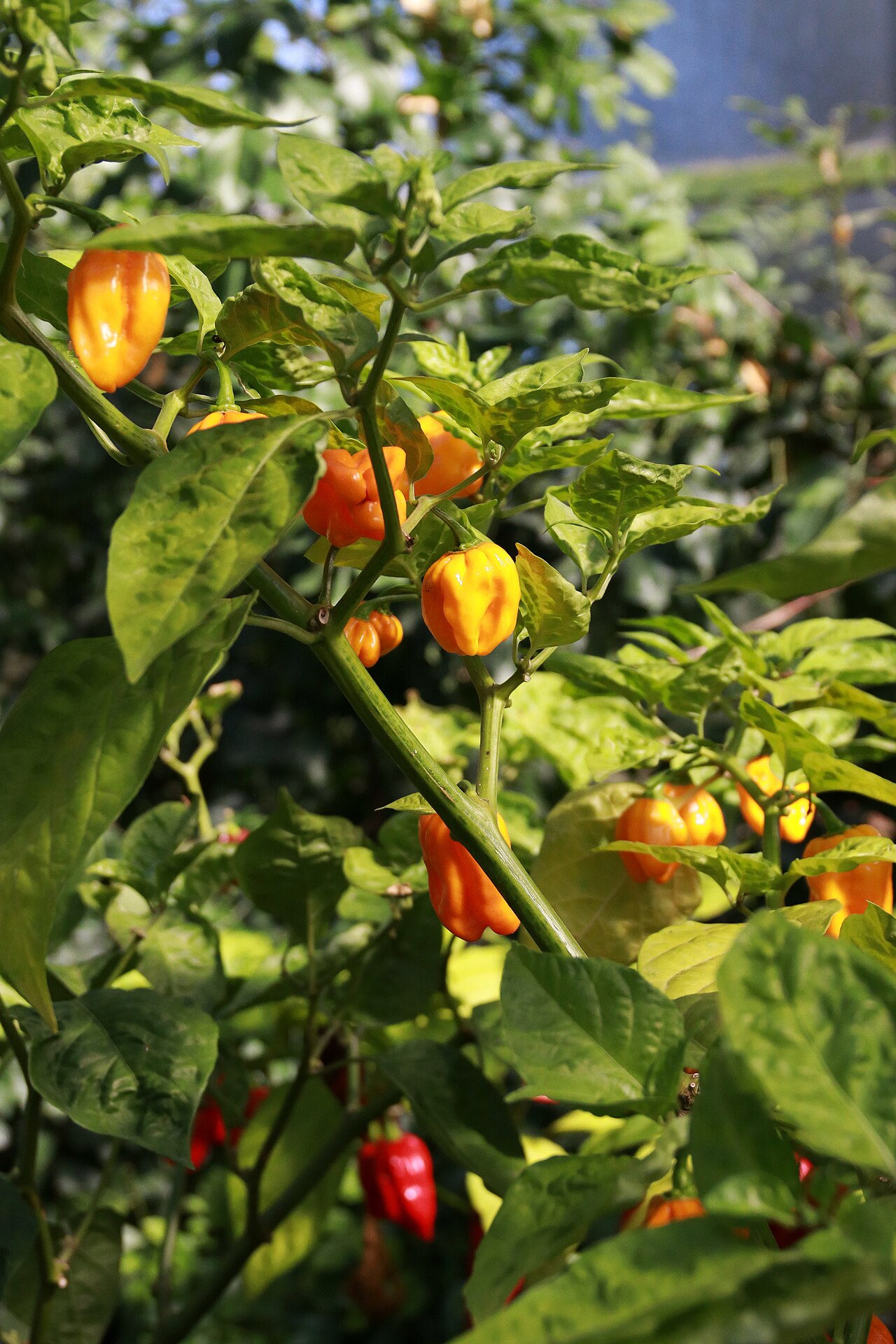
The habanero's significance lies in its extreme heat and distinctive floral aroma, making it a staple in hot sauces and spicy cuisines worldwide. Its legacy includes being the first chili to hold the Guinness World Record for hottest pepper, though it has since been surpassed. The habanero's cultivation thrives in hot weather with slightly acidic soil (pH 5–6) and good morning sun; daily watering increases vegetative growth but reduces capsaicin concentration compared to watering only when dry. Overly moist soil produces bitter peppers. As a perennial flowering plant, it can produce fruit for years in tropical regions but is treated as an annual in temperate climates.
Did You Know?
- The habanero is named after Havana, Cuba, due to historical trading there, though it is rarely used in traditional Cuban cooking.
- In English, it is sometimes incorrectly spelled 'habañero' with a tilde, a hyperforeignism patterned after 'jalapeño'.
Botanical Roots & Naming
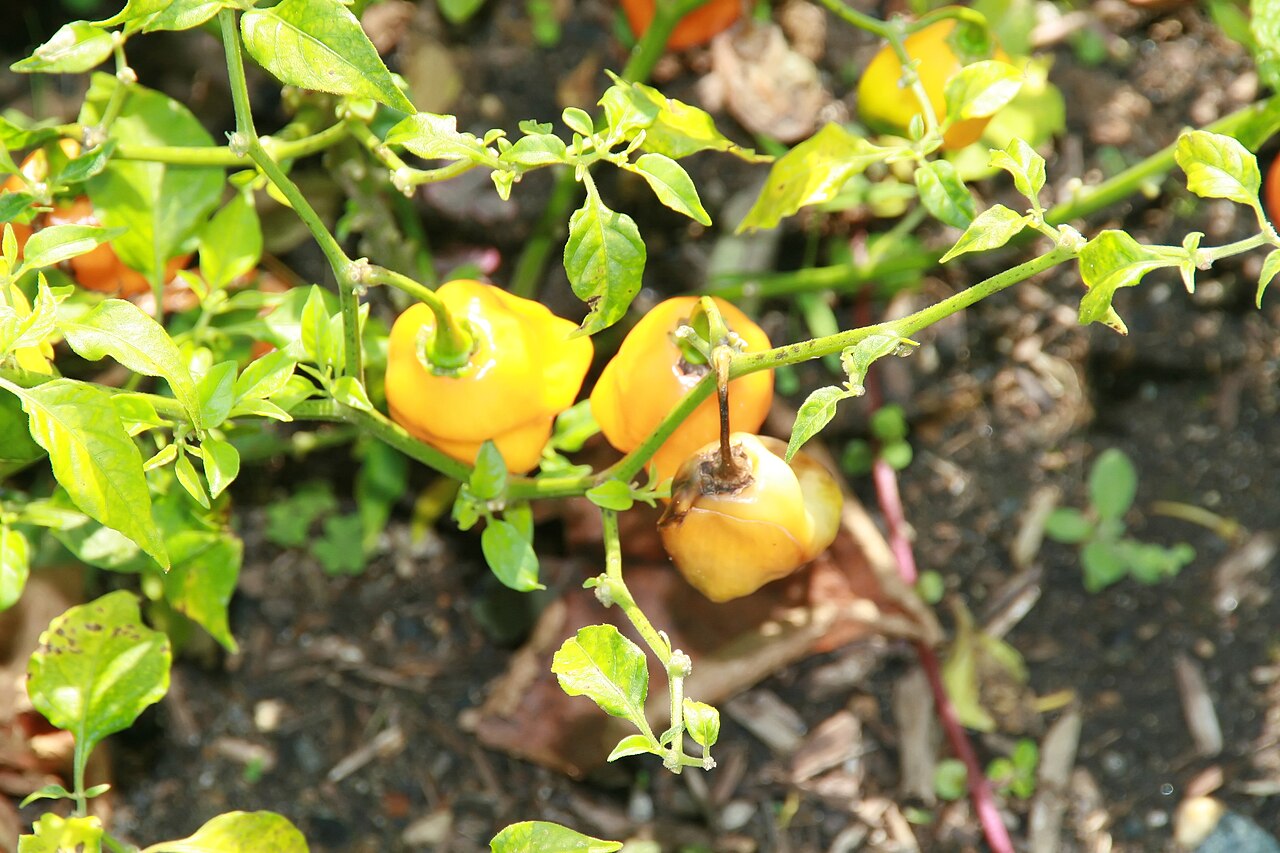
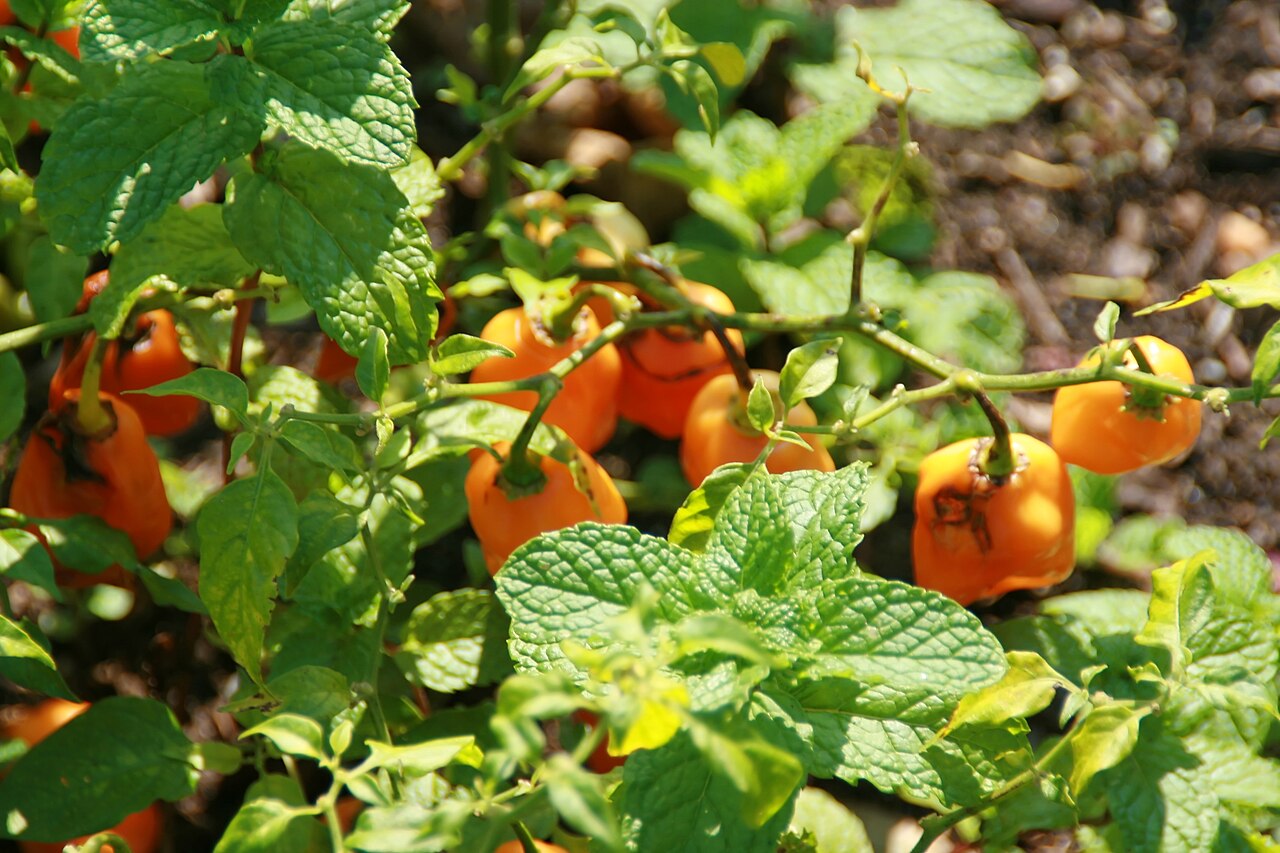
The Scotch bonnet pepper is a cultivar of Capsicum chinense, a species whose wild ancestors trace back to the Amazon Basin and the broader Central and South American region. Despite its evocative name—a reference to the shape of a Scottish tam o' shanter bonnet—this chili is entirely New World in origin. It goes by several other names depending on where you are: Bonney pepper, Caribbean red pepper, or, in parts of Central America, Panamanian pepper. Botanically, Capsicum chinense carries a few structural signatures that set it apart from the more common Capsicum annuum. Where annuum typically produces a single flower at each node, chinense often clusters two or more blooms and fruits at the same point. The calyx where the fruit meets the stalk also shows a noticeable ring-like constriction. However, these markers are not foolproof; the species can be genuinely hard to distinguish at the flowering or early fruiting stage, which complicates identification for growers and seed sellers alike.
Indigenous Voyages & the Columbian Exchange
Long before European ships reached the Caribbean, Arawakan-speaking peoples were already moving chilies across the sea. The Tainos, who had roots in the Yucatán Peninsula and Belize, and the Caribs, both tracing their origins to the Orinoco River Valley in what is now Venezuela, carried scotch bonnets alongside staples like cassava and sweet potato in large canoes to the Greater Antilles. The Tainos were particularly noted as early voyagers in this region, and the peppers they brought with them eventually became woven into the culinary fabric of the islands. The story then shifted dramatically in the fifteenth and sixteenth centuries, when Spanish and Portuguese colonizers carried these peppers far beyond the Caribbean. Through the broader Columbian exchange, all five domesticated Capsicum species spread into Europe, Africa, and Asia, where local growers developed new varieties. The adoption was so thorough in Asian and African kitchens that many people in those regions today have no awareness that chili peppers are fundamentally Mesoamerican in origin.
A Staple Across Caribbean and Global Kitchens
In the kitchen, the scotch bonnet occupies a position of real importance. While it shares its species and heat range with the habanero, cooks often note that the bonnet carries a noticeably sweeter, fruitier, almost citrus-like undertone, along with a stouter, more rounded shape. In Jamaica, it is indispensable: the Taino-originated jerk tradition depends on it, and it appears in jerk chicken, curry goat, escovitch fish, peppered shrimp, and rice and peas, as well as in pepper sauces, soups, and stews. Beyond the Caribbean, the pepper has found a home in West African, Sri Lankan, and Maldivian cooking, where it features in curries and pepper sauces. In Latin America, particularly along the coasts of Nicaragua, Costa Rica, Honduras, Panama, and the island of San Andrés, it serves as a substitute for habaneros in Caribbean-styled dishes like rondón, beef patties, sous, and ceviche. On some Caribbean islands, growers even cultivate a completely sweet variety called cachucha, showing the pepper's versatility beyond pure heat.
Heat, Mislabeling & the Peppergate Controversy
On the Scoville scale, a scotch bonnet registers between 100,000 and 350,000 units of capsaicin heat. To put that in perspective, a typical jalapeño sits at roughly 2,500 to 8,000 units, making the bonnet dozens of times hotter. Yet the pepper's identity is not always what the label claims. Because young plants of different chili varieties can look nearly identical, scotch bonnet seeds and seedlings are frequently mislabeled by sellers. A grower may tend a plant for weeks or months before the first fruits reveal the true variety. This confusion has become a recurring headache in home-gardening communities. A widely discussed 2026 incident involved peppers sold under unrelated names that gardeners had assumed were scotch bonnets. Even earlier, a 2023 wave of seed mix-ups in online gardening forums earned the informal nickname Peppergate, highlighting how easily the pepper's identity gets tangled up in the broader world of home cultivation.
Gallery
Frequently Asked Questions
What is a habanero pepper?
The habanero is a small, intensely pungent chili pepper belonging to the Capsicum chinense species. It's celebrated for pairing a serious heat level with a distinctive floral aroma, which makes it a go-to ingredient in hot sauces and spicy dishes around the world.
Why is the habanero named after Havana, Cuba?
The name traces back to historical trade routes that funneled the pepper through Havana, even though the species actually originated in the Amazon region before spreading into Mexico. Despite the naming link, traditional Cuban cooking rarely calls for habaneros.
What colors can a habanero pepper be?
Beyond the familiar orange and red, habaneros can ripen into white, brown, yellow, green, or purple. They all start out green when unripe and shift to their final hue as they mature on the plant, usually reaching 2 to 6 centimeters in length.
Where are habaneros primarily grown today?
The Yucatán Peninsula in Mexico is the world's largest producer of habanero peppers, a region where the fruit became deeply woven into local cooking traditions. The species itself evolved in the Amazon basin before spreading northward into Mexico and beyond.
More in Peppers & Citrus Fruits 1-17
Spotted an error? Know more?
This is a living reference — every entry is fact-audited, and reader corrections feed straight into our audit queue. Suggest an edit · See this site's audit record